



Mini Excavator Transport and Site Delivery — Getting the Machine Where the Job Is
A compact excavator sitting on a job site is productive. The same machine on the wrong trailer, with incorrect tie-downs, in the wrong shipping configuration, is a liability. Mini excavator transport — whether across town on a flat-deck trailer or across an ocean in a shipping container — is a logistics discipline with specific requirements for load weight, machine posture, tie-down points, and documentation. Getting any of these wrong creates risk during transit and complications at the destination that are preventable with the right preparation.
This article covers the practical transport requirements for the compact excavator range: trailer specifications for road transport by machine weight class, the correct loading and tie-down procedure, international shipping configurations (container and breakbulk), and the export documentation that major import markets require. It is aimed at buyers who are self-transporting machines, logistics coordinators managing fleet moves, and importers receiving machines from overseas suppliers.
Trailer Selection by Machine Weight — The Rated Capacity Calculation
The first requirement for mini excavator transport by road is a trailer rated for the machine's operating weight with adequate margin. Trailer payload ratings are the trailer's gross payload capacity, not the machine weight alone — the tie-down equipment, ramps, and any toolbox weight also count against the payload. The 06 series at 660 kg requires the lightest trailer specification; a standard 3,500 kg GVW car and plant trailer with a rated payload of 2,500 kg is more than adequate. The 10 series at 1,000 kg and the 12K at 1,000 to 1,050 kg fit the same trailer class.
The 17 series at 1,700 kg and the 20 series at 1,850 kg require a trailer with a rated payload of at least 2,500 kg and a GVW rating that — combined with the towing vehicle — complies with the applicable maximum vehicle and trailer GVW regulations for the road classification being used. In the UK and EU, a car-and-trailer combination carrying a 1,700 kg machine may push the operator's vehicle into a category requiring a higher driving licence endorsement. This is not an equipment question but a compliance question that the machine owner must resolve before the first transport movement.
The 22 series at 2,100 kg requires a dedicated plant trailer rated for at least 3,000 kg payload, typically a tandem-axle trailer with a rated GVW of 3,500 kg or higher. The towing vehicle for this combination is typically a heavy pickup truck or light commercial vehicle with a tow rating that matches the total trailer GVW. Towing a 22 series machine on a trailer with a tow vehicle rated below the combined weight is both illegal and mechanically dangerous — the braking and stability characteristics of the towing combination are designed around the tow rating.
Loading Procedure — Ramp Angle, Machine Posture, and the Sequence That Prevents Accidents
Loading a compact excavator onto a trailer is a low-speed manoeuvre that goes wrong when the ramp angle is too steep, the machine approaches the ramp at an angle rather than square, or the bucket is positioned incorrectly during the climb. The correct procedure: position the trailer on level ground, confirm the ramps are at their minimum achievable angle (flatter is safer), drive the machine to the ramp foot dead square to the trailer centreline, lower the bucket to the ramp surface as a third contact point, and travel slowly forward using low-speed drive with the bucket providing gentle downward stabilising force on the ramp.
Once on the trailer deck, position the machine so its centre of gravity is between the trailer axles — for a tandem-axle trailer, this typically means the machine's midpoint sits between the axle centres, not at the front or rear of the deck. Distribute the machine weight evenly left to right by centring the tracks on the deck width. Apply the travel locks if fitted; lower the boom until the bucket makes light contact with the deck surface. The machine should not rest on the bucket under full boom weight — the bucket contact is a stability aid, not a primary load support.
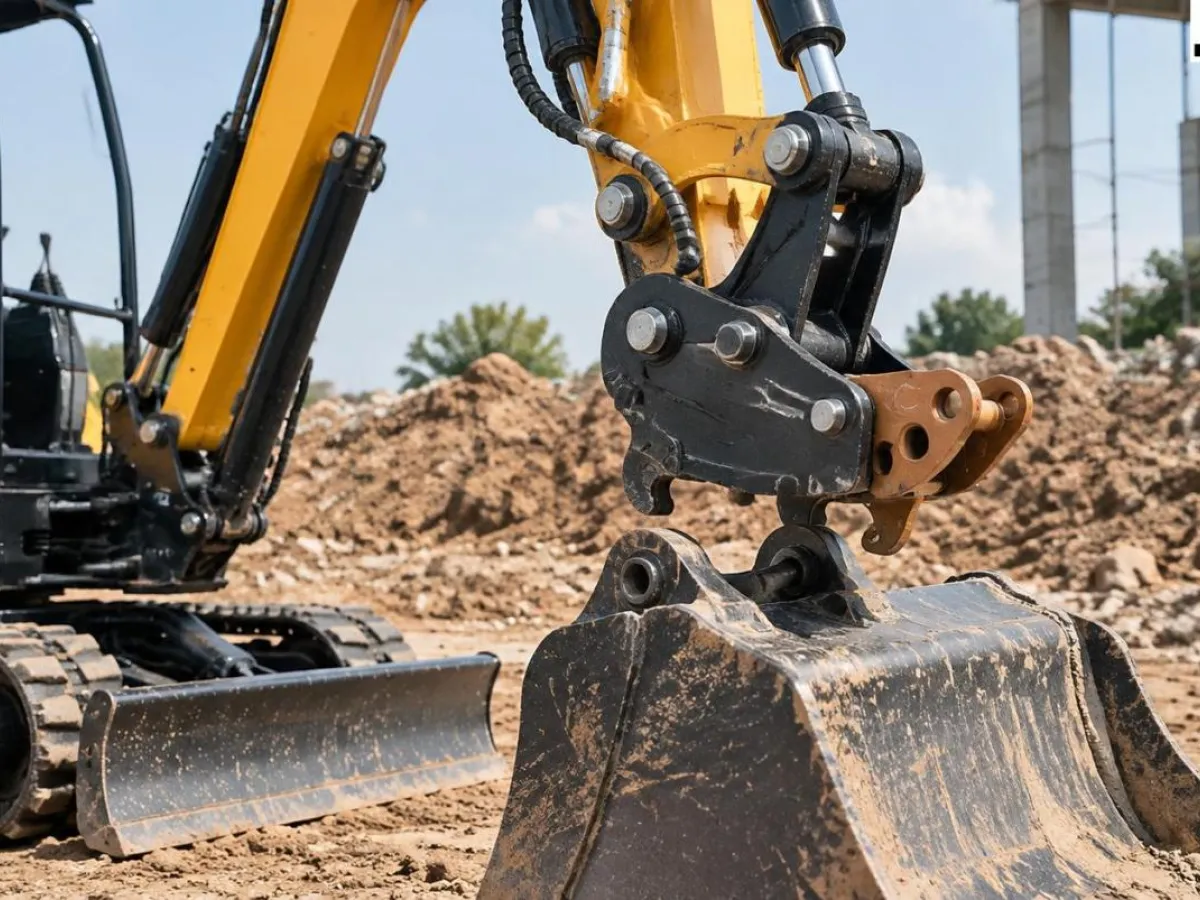
Tie-down points on the machine are specific weld lug positions on the frame — do not use hydraulic hose connections, pin bosses, or structural tube members as tie-down points. The frame lugs are reinforced for lashing loads; other frame features are not. Four-chain tie-down at the designated lugs — two forward, two aft — using chains rated for the machine weight provides the correct restraint. Ratchet straps alone are not adequate for plant transport in most regulatory contexts; chains provide the rated load capacity and the resistance to vibration fatigue that straps do not.
International Shipping — Container vs Breakbulk
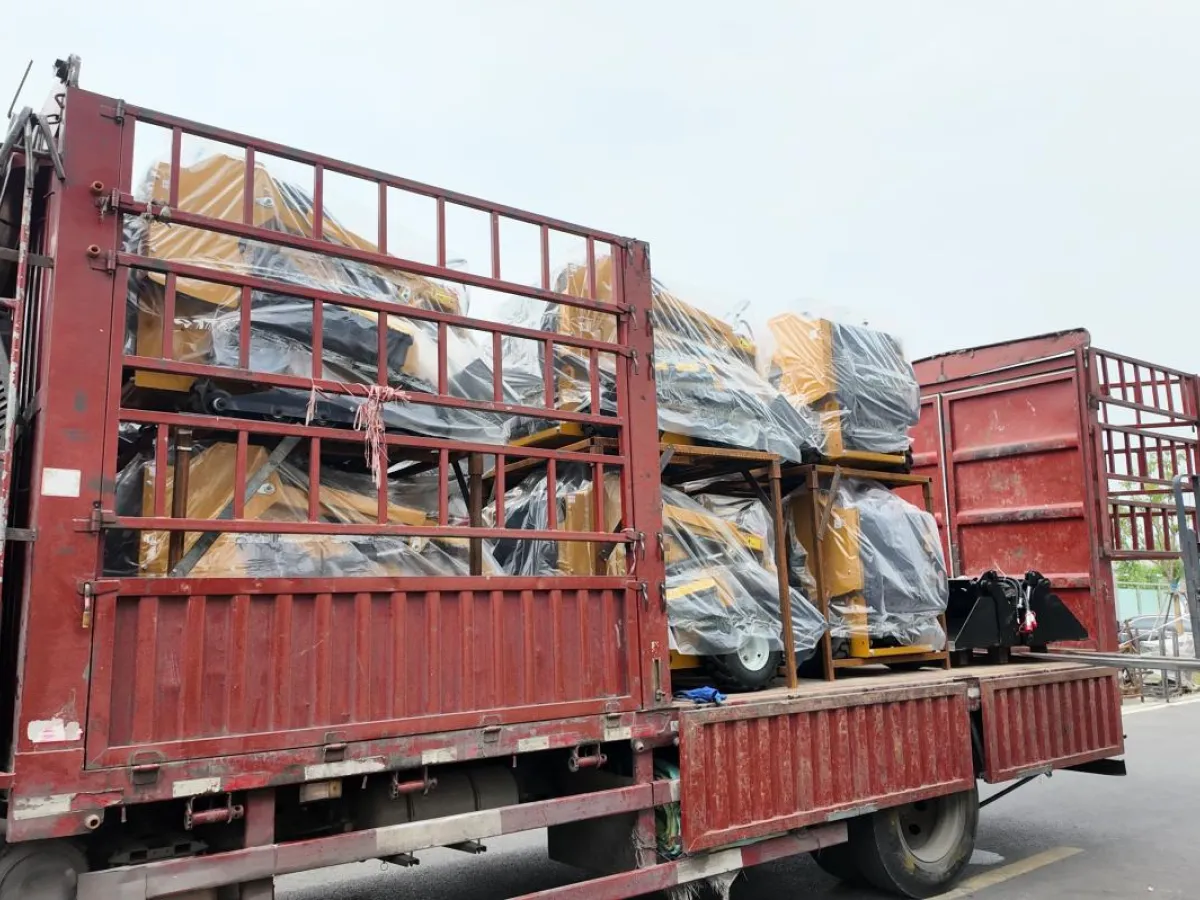
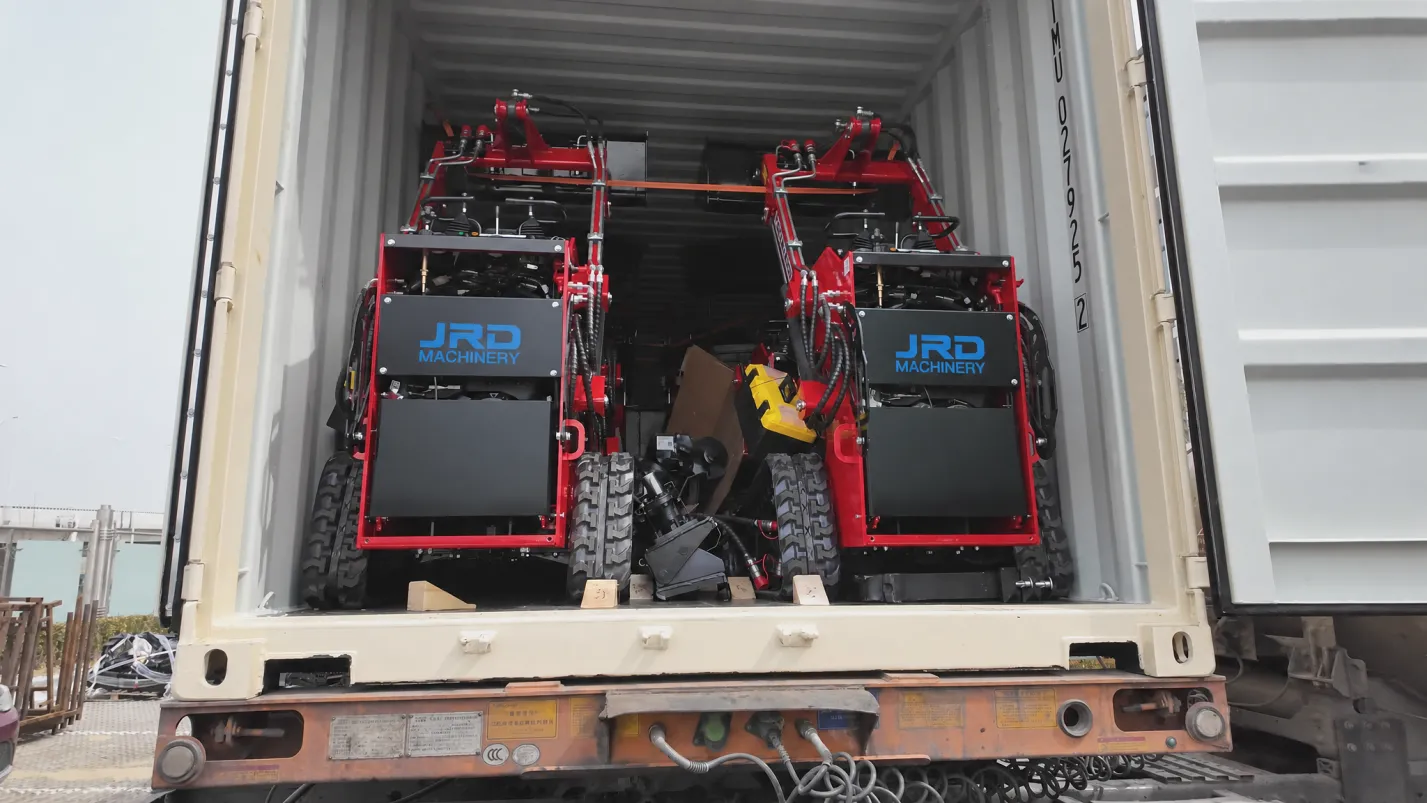
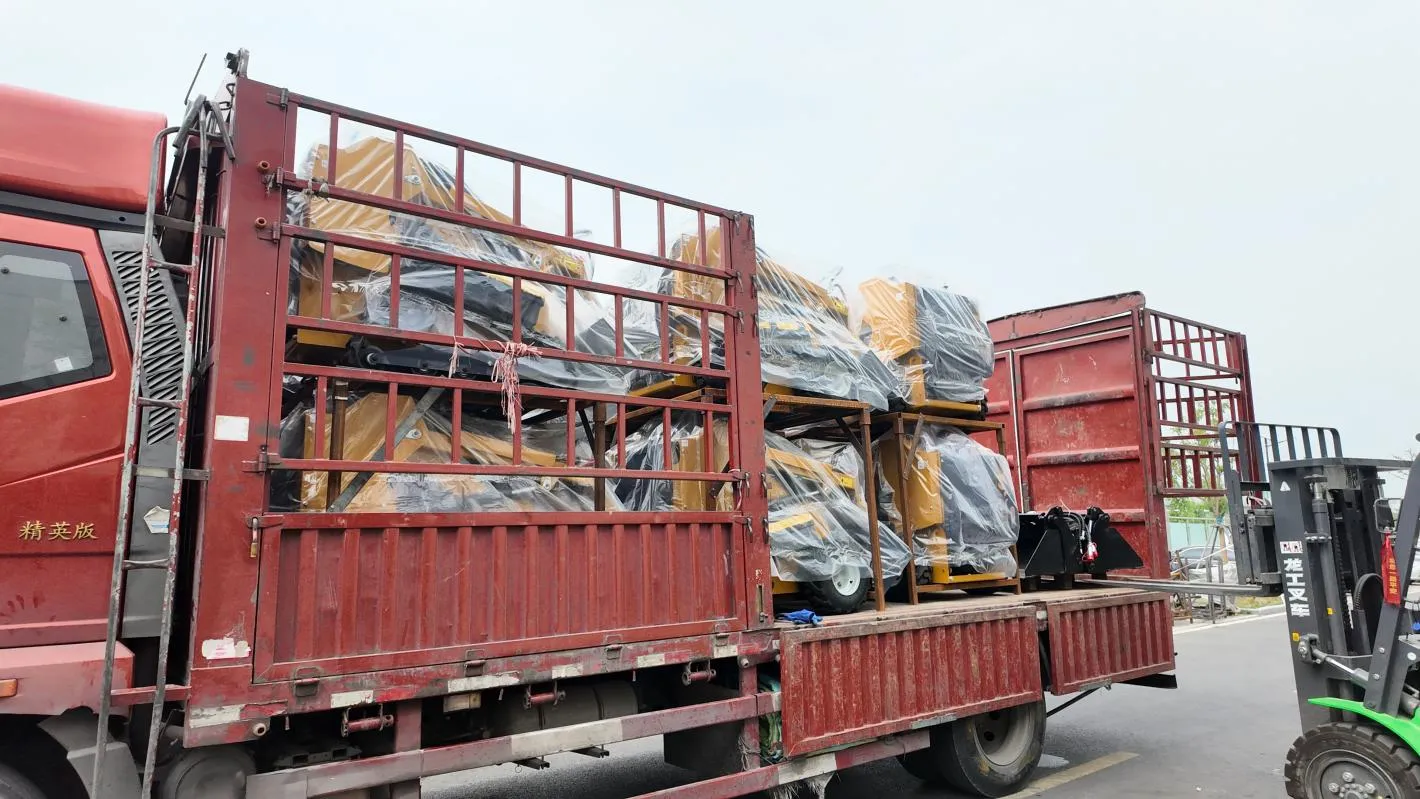
For export orders, the mini excavator transport method is determined by order volume and destination port infrastructure. Container shipping is the standard for most export movements: the machine is loaded into a 20-foot or 40-foot ISO container, blocked and braced inside the container to prevent movement, and shipped as part of a standard containerised cargo movement. Container shipping offers the advantage of port handling without specialized lifting equipment at the destination — any port with a standard container crane can handle the movement.
A single 06 series at 660 kg fits easily into a 20-foot container with room for accessories and attachments. Machines in the 10 to 13 series can typically be configured two per 20-foot container depending on whether cabs and booms are removed or folded for shipping — confirm with the exporter at the time of order, as shipping configuration affects the delivered price. The 22 series at 2,100 kg typically ships one per 20-foot container or one to two per 40-foot container depending on dimension.
Breakbulk shipping — the machine loaded directly onto a vessel as deck or hold cargo rather than in a container — is used for very large orders, markets without container infrastructure, or project-specific deployments where the machine dimensions exceed container limits. Breakbulk loading requires the machine to be wrapped or sheeted for weather protection during ocean transit and may require port crane handling at both origin and destination. The logistics cost per unit for breakbulk is typically higher than container for small volumes but can be competitive for large fleet shipments.
Export Documentation — What Major Markets Require
CE marking documentation is required for import into European Union and UK markets. The CE Declaration of Conformity is issued by the manufacturer and confirms that the machine meets the applicable EU directives — for excavators, primarily the Machinery Directive and the Outdoor Noise Directive. This document must accompany the machine and be available for inspection at the port of entry. Importing a machine without CE documentation into an EU market risks seizure at the port and refusal of entry.
For North American import, EPA emission compliance documentation is required for the engine. The engine must meet Tier 4 Final standards for new machine imports. Most Kubota D722 and Yanmar configurations sold into North American markets are Tier 4 Final compliant; confirm at the point of order, as earlier engine production runs may not be.
Australian import requires compliance with Australian Design Rules (ADR) for mobile plant and may require the machine to be inspected and certified by an approved assessment body before operation. New Zealand has similar requirements. For Middle Eastern markets, Saudi Arabia SASO certification and UAE ESMA product registration are increasingly required for new machine imports — these are market access certifications that the exporter should be able to advise on, and which may have lead times of four to eight weeks for first-time registrations.
Commercial invoice, packing list, bill of lading, and certificate of origin are required for all export shipments. The certificate of origin is issued by the relevant chamber of commerce in the exporting country and confirms the machine's country of manufacture — this affects import duty rates under preferential trade agreements. For buyers whose country has a trade agreement with China, confirming that the machines qualify for preferential duty rates under the applicable agreement may significantly reduce the landed cost.
Receiving the Machine — Checks on Delivery
When a shipped machine arrives — whether by road trailer or container — the receiving procedure is as important as the shipping procedure for establishing the machine's condition. Before signing the delivery receipt: inspect the machine's exterior for impact damage (dents, cracked components, bent boom or stick), check all hydraulic hose connections for shipping-related loosening, confirm that all attached accessories (bucket, any fitted attachments) are present and undamaged, and photograph any findings before the delivery vehicle departs.
For container shipments, inspect the container interior for water ingress (wet floor or condensation on the machine) before unloading. Ocean transit involves significant temperature cycling that can cause condensation inside sealed containers even with no external water entry — moisture on electrical components and steel surfaces initiates corrosion that is not immediately visible but accelerates during operation. If moisture is found, dry the machine thoroughly before first operation and apply corrosion inhibitor to exposed steel surfaces.
After unloading, perform the full pre-operation check from Article 62 before the first start: engine oil, coolant, hydraulic oil level, track tension, and a visual check of all hose runs. The first start after a long shipping period should be at low idle for five minutes before putting the machine under any hydraulic load — this allows oil to circulate and temperatures to equalise before the first working cycle.
Importing compact excavators and need export documentation, CE certification, or shipping support?
JRD Machinery handles CE certification, export documentation, and container shipping coordination for all models in the range. We can advise on destination-market import requirements and preferred freight forwarders for major trade lanes.
Visit www.JRDmachinery.com or contact us with your port of destination and order volume for a full landed cost calculation including freight and documentation.