



Mini Excavator Maintenance Schedule — What to Check and When
Unplanned downtime on a compact excavator is almost always a maintenance story. The hydraulic hose that failed mid-shift was already showing abrasion at the last service. The engine that overheated had a coolant level that nobody had checked in six weeks. The track that derailed had been running at the wrong tension for two months. Mini excavator maintenance done systematically at the correct intervals prevents most of these events — not all, but the large majority that come from gradual wear rather than sudden failure.
This article sets out a practical service framework for compact excavators covering daily operator checks, the 50-hour light service, the 250-hour major service, and the annual or 1,000-hour overhaul items. The intervals apply across the range — the 06 series to the 22 series — with notes where specific model configurations (variable piston pump machines, pilot control machines, enclosed cab machines) have additional or different service requirements.
Daily Checks — Ten Minutes That Prevent Shift Failures
Before the engine starts each working day, five checks take less than ten minutes and address the causes of the majority of in-shift breakdowns. The first is engine oil level: pull the dipstick, wipe clean, reinsert, and read. Oil that is below the minimum mark gets topped up before startup — never after the engine has been running, as thermal expansion gives a false high reading for 15 minutes following shutdown. Oil that is significantly darker than new oil, or that shows a milky appearance indicating coolant contamination, flags a workshop visit.
The second check is hydraulic oil level via the sight glass on the hydraulic tank. The machine should be on level ground with all cylinders retracted (boom down, bucket curled) for an accurate reading. Low hydraulic oil level is not self-correcting — if the level has dropped since the last check and no visible hydraulic leak is present, the oil is leaking internally (past cylinder seals) or has been pushed past a breather. Either condition warrants investigation before the day's work begins.
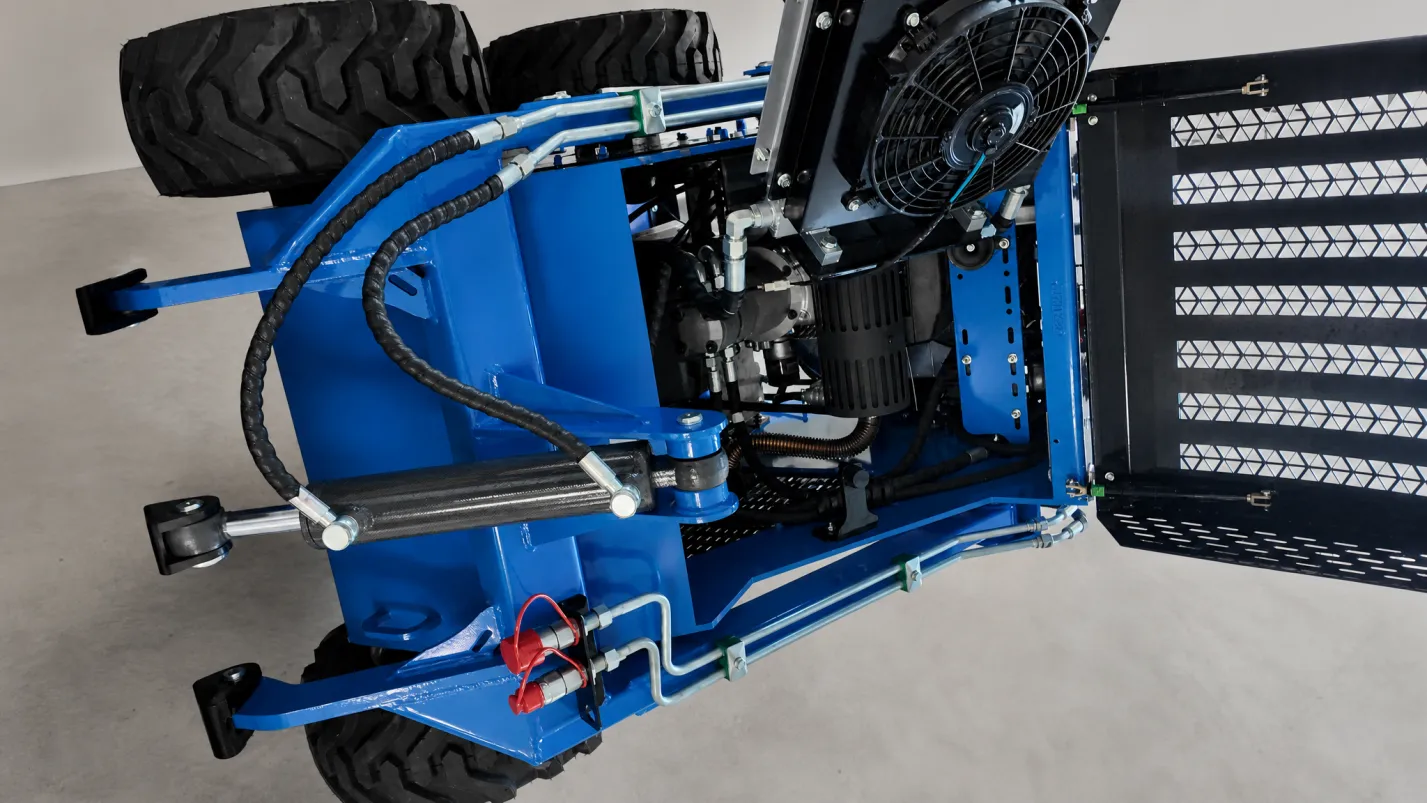
The third check is coolant level in the engine coolant reservoir. A level that is consistently dropping without visible external leak indicates an internal leak — head gasket or cracked liner — that will produce overheating and engine damage if not addressed. The fourth check is mini excavator maintenance fundamentals: visual scan of hydraulic hose runs for abrasion, bulging, or oil film on the outer sheath. A hose that is failing from the inside will show a slight bulge at a weak point before it ruptures — catching it at this stage is far preferable to a mid-shift hydraulic hose failure with the machine deep in a trench.
The fifth daily check is track tension. As described in Article 52, sag at the mid-point of the lower track run should be within the manufacturer's specified range. Thirty seconds per side with a straightedge or simply a visual check of sag against the undercarriage frame baseline. A track that has gone suddenly slack since yesterday may have lost grease from the tensioner — add grease at the tensioner nipple before operating.
The 50-Hour Service — Light Maintenance That Protects Heavy Components
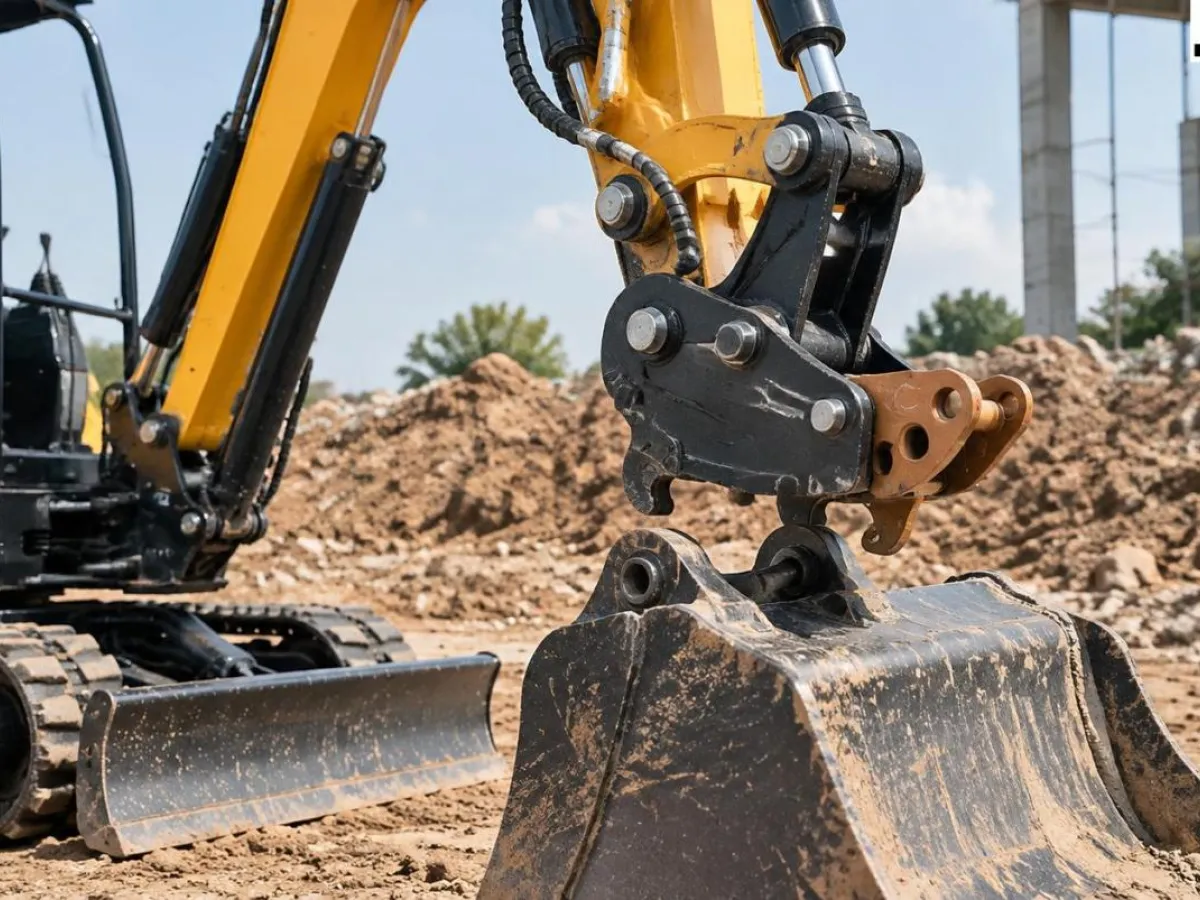
At 50 operating hours — approximately two weeks of full-time site use — the following tasks should be completed. Grease all boom and stick pin points: the boom foot pins, the bucket link pins, the idler pivot, and the swing bearing grease points if fitted. The number of grease nipples varies by model — the 17 series and 22 series with swing bearing have additional lubrication points compared to the simpler Q-series machines. Use the grease points diagram in the operator manual as the reference; greasing only the visible or easy-to-reach nipples and skipping the obscure ones is a common error that produces uneven wear across the structure.
At 50 hours in dusty environments, clean the air filter element. In normal environments, this interval extends to 100 hours, but in sandy or high-dust construction sites, the filter can load in half this time. Tap the element gently to dislodge loose dust, blow compressed air from inside outward, and check the element for tears or holes before reinstalling. A torn element — even a small pinhole — allows unfiltered air to reach the engine; the element should be replaced, not repaired.
Check all hydraulic hose connections for seepage at the fitting faces. Fittings that show a slight oil weep at the flare face are candidates for retorquing — typically to the specified face seal torque for the fitting size. Do not over-torque: deforming the face seal is not repairable without a new fitting and hose end. Check the swing motor case drain hose (where fitted) and the travel motor case drain connections — case drain lines on hydraulic motors carry low-pressure hot oil back to the tank and are subject to heat cycling that fatigues the hose faster than high-pressure lines.
The 250-Hour Service — The Core Maintenance Interval
The 250-hour service is the most consequential routine mini excavator maintenance interval. Engine oil and filter: drain the oil while the engine is warm (warm oil carries contaminants in suspension; cold oil leaves them settled in the sump), replace the oil filter, refill with the specified grade and quantity. The engine oil specification for the Kubota D722 and Yanmar 3TNV80 is typically 15W-40 diesel engine oil to API CJ-4 or CF-4 — confirm with the specific engine manual, as oil specifications can vary by emission standard generation.
Fuel filter replacement at 250 hours is often neglected because the machine runs fine until the filter is almost completely blocked. In diesel systems, a partially blocked fuel filter allows the engine to run at light loads but starves the injectors under full throttle — the symptom is reduced power during hard digging that resolves immediately after filter replacement. The fuel filter is a low-cost item; replacing it on schedule is the simplest preventive maintenance task in the service schedule.
Hydraulic return line filter replacement: this filter catches particles generated by the hydraulic circuit components themselves — pump wear particles, cylinder seal debris, valve body wear. It is not a primary protection filter (that is the charge filter on piston pump machines); it is the circuit cleanup filter that prevents progressive contamination buildup. Skipping hydraulic return filter replacement because the machine is running fine is false economy — the filter's purpose is to prevent the problem, not to signal it after the fact.
On machines with variable piston pumps — the 17 series and 22 series — the 250-hour service should also include checking the pump case drain flow rate if a flow meter is available. A piston pump that is beginning to wear internally will show elevated case drain flow before it shows degraded output pressure, making this check an early warning system for pump condition.
Annual and 1,000-Hour Service — Long-Interval Items
Hydraulic oil change: standard mineral oil in a compact excavator circuit should be changed at 1,000 hours under normal conditions, or annually if 1,000 hours has not been reached but the oil has been thermally stressed (regular breaker use, summer operation at sustained high ambient temperatures). Drain from the lowest point of the hydraulic tank, flush the tank interior with a small quantity of fresh oil, replace the return filter and suction strainer simultaneously, and refill. Using the wrong viscosity grade is a common refill error — confirm the specified viscosity for the operating temperature range, as hot-climate and cold-climate deployments may use different grades.
Engine coolant renewal at 2,000 hours or two years: coolant loses its corrosion inhibitor package before it loses its heat transfer capacity, so visual condition of the coolant is not a reliable indicator of whether it needs replacement. Follow the calendar interval regardless of colour. When draining, flush the cooling circuit with clean water before refilling — old coolant deposits can contaminate new coolant and reduce inhibitor life.
Swing bearing inspection: on machines with a full rotary swing bearing (the K-series and larger Q-series), inspect the bearing raceway for pitting, spalling, or rough rotation by slewing slowly with no load and listening for uneven resistance. Swing bearing replacement is a workshop task requiring the machine to be lifted and the upper structure separated from the lower — catching degradation early allows planned replacement rather than emergency replacement after a bearing seizure.
Track frame inspection for cracks: the track frame (undercarriage chassis) is a highly stressed weldment that absorbs travel loads, work cycle loads, and any overload events from the machine's operating life. Annual inspection of the weld seams at the idler mounting, the drive sprocket housing, and the track frame side rails for cracking is a structural safety check. A crack caught early can be repaired; a crack that has propagated through the frame section requires full frame replacement.
Maintenance Log — Why the Record Matters as Much as the Work
A compact excavator without a service log is worth less than the same machine with complete records — not because buyers are irrational, but because the service log is the evidence that the work was done. A machine that "always had its oil changed on time" without documentation is indistinguishable from a machine that didn't. In rental fleet management, service records are also the basis for warranty claims, insurance documentation, and the usage-based pricing that some fleet managers use to recover maintenance costs from high-utilisation customers.
The minimum useful service log records: date, operating hours at service, tasks completed, parts replaced with part numbers, oil grade and quantity used, and the name of the person performing the service. A spreadsheet or a notebook both serve this purpose; the information is the asset, not the format. For machines that will be exported or resold into markets with rigorous import inspection (the UK, Germany, and Australia all apply detailed machinery inspection requirements), a complete service log is part of the machine's compliance documentation package.
Need maintenance documentation or spare parts support for compact excavators in your market?
JRD Machinery provides service manuals, maintenance schedule documentation, and parts lists for all models in the range. CE certification and full technical documentation available for export compliance.
Visit www.JRDmachinery.com or contact us for model-specific service documentation and spare parts enquiries.